

Call us now
07315127394

 Send Inquiry
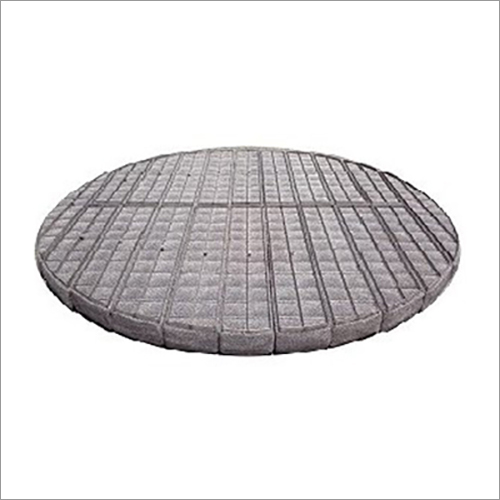
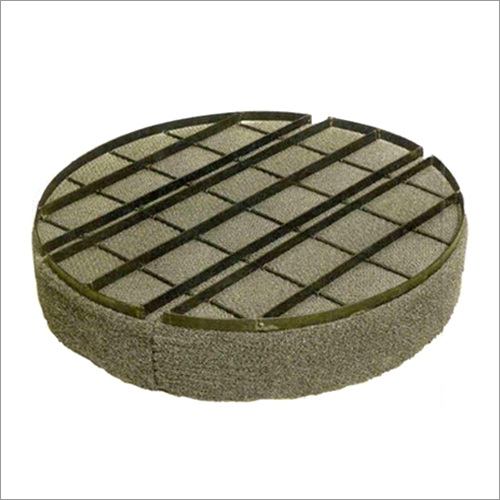
Demister Mesh Pads
Price 800 INR/ Piece
MOQ : 100 Pieces
Demister Mesh Pads Specification
- Hole Shape
- Rectangular
- Surface Treatment
- Galvanized / Plain / Stainless Steel
- Aperture
- Variable
- Wire Gauge
- 10-12 Gauge
- Length
- Custom as per requirement
- Product Type
- Demister Mesh Pad
- Mesh Type
- Fine Wire Mesh
- Mesh Style
- Knitted Mesh
- Material
- SS304, SS316, GI, Monel, Hastelloy, PTFE, Polypropylene
- Alloy
- SS304 / SS316 / Monel / Hastelloy
- Application
- Gas-Liquid Separation, Oil & Gas, Chemical Plants, Petrochemical, Process Vessels
- Dimensions
- Customized (typical thickness 100 mm, diameter as required)
- Wire Diameter
- 0.15 mm to 0.30 mm
- Weight
- As per design / customer request
- Color
- Silver / Metallic Grey
- Custom Sizes
- Available on request
- Edge Type
- With or without frame (as required)
- Corrosion Resistance
- Excellent (depends on selected material)
- Packing Density
- 80-200 kg/m3 (as per design)
- Efficiency
- 99% for droplet size > 3 microns
- Standard Thickness
- 100 mm
- Service Life
- Long, varies with material and application
- Operating Temperature
- Up to 600C (material dependent)
- Mounting Type
- Horizontal and Vertical Installation
- Standard Diameter
- As per vessel size - generally 300 mm to 5000 mm
- Pressure Drop
- Low, typically less than 25 mm H2O
- Layer Structure
- Single or Multi-layered
Demister Mesh Pads Trade Information
- Minimum Order Quantity
- 100 Pieces
- Payment Terms
- Cash in Advance (CID)
- Supply Ability
- 5000 Pieces Per Month
- Delivery Time
- 7 Days
- Main Domestic Market
- All India
About Demister Mesh Pads
Demister Mesh Pads are the ones known with some other names like mist eliminator or spray and wire mesh demister also. These are designed accurately for removing the contaminants from the process of air emissions. Demister Mesh Pads are made either from GI wire or SS wire for the auto industry to remove the liquid droplets from the vapour streams or gas.
Superior Separation Efficiency
Designed to capture over 99% of droplets greater than 3 microns, Demister Mesh Pads provide highly effective gas-liquid separation. This ensures cleaner process streams, reduced emission levels, and improved downstream equipment performance, making them an essential choice for industries where purity and efficiency are paramount.
Customized for Diverse Applications
With a wide selection of materials-including stainless steel, Monel, Hastelloy, PTFE, and polypropylene-these demister pads can be tailored for various service conditions. They support a range of vessel sizes, layer structures, and can be installed horizontally or vertically, making them exceptionally versatile for oil & gas, chemical plants, and more.
Durability and Low Maintenance
Engineered for longevity, these pads boast excellent corrosion resistance and sturdy construction. Their service life is maximized by choosing materials that best match application demands, reducing maintenance interventions and ensuring consistent performance throughout their operational lifespan.
FAQ's of Demister Mesh Pads:
Q: How do Demister Mesh Pads function in gas-liquid separation processes?
A: Demister Mesh Pads operate by providing a large surface area for entrained liquid droplets to collide and coalesce. As process gas passes through the mesh, droplets larger than 3 microns are captured and removed, resulting in efficient phase separation and cleaner gas output.Q: What are the benefits of using Demister Mesh Pads in industrial vessels?
A: These pads offer high separation efficiency (99%), low pressure drop, and excellent corrosion resistance, leading to cleaner product streams, protection for downstream equipment, and reduced maintenance costs. Their customizable size and material options further enhance suitability for a variety of applications.Q: When should I consider a custom Demister Mesh Pad design?
A: Custom designs are ideal when your vessel size, process conditions, or material compatibility requirements differ from standard offerings. Factors like temperature (up to 600C), chemical compatibility, and vessel geometry often necessitate tailoring the mesh pad to your specific needs.Q: Where can Demister Mesh Pads be installed within a process system?
A: These pads are suitable for installation in vertical or horizontal orientation within process vessels, gas-liquid separators, and scrubbers, commonly found in the oil & gas, chemical, and petrochemical industries.Q: What is the typical service life of a Demister Mesh Pad?
A: Service life depends on factors such as process conditions, material selection, and maintenance. With materials like SS316, Monel, or Hastelloy, service life is generally long. Selecting the appropriate material provides optimal durability under harsh operating environments.Q: How is the Demister Mesh Pad installation process conducted?
A: Installation involves fitting the pad into the designated vessel section, which can be facilitated with or without frames as specified. Pads are available in standard and custom diameters (typically 300 mm to 5000 mm), and can be layered singly or in multiple layers to suit process demands.Q: What surface treatments and mesh styles are available for these pads?
A: Surface treatments include plain, galvanized, and stainless steel finishes, while mesh styles are available as knitted or fine wire mesh. Aperture and wire diameter are variable and can be specified according to application.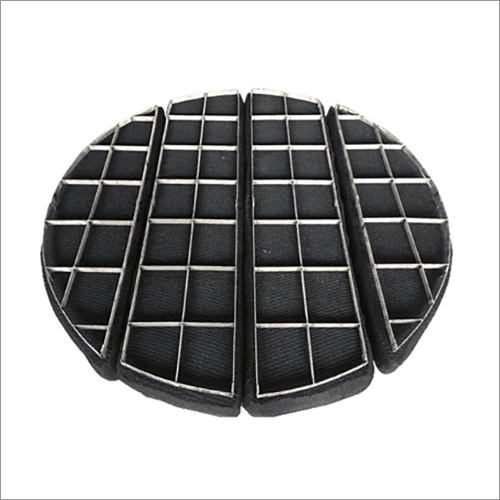
Tell us about your requirement

Price:
Quantity
Select Unit
- 50
- 100
- 200
- 250
- 500
- 1000+
Additional detail
Mobile number
Email

More Products in Demister Pads Category
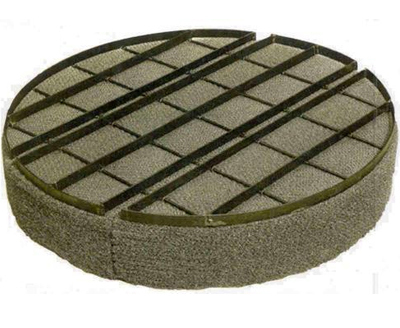
Demister Pads for Auto Industry
Minimum Order Quantity : 100 Pieces
Material : Other, Stainless Steel / GI / Copper
Mesh Style : Knitted Wire Mesh
Surface Treatment : Other, Galvanized / Stainless steel finish
Color : Metallic Silver
Aperture : Fine mesh
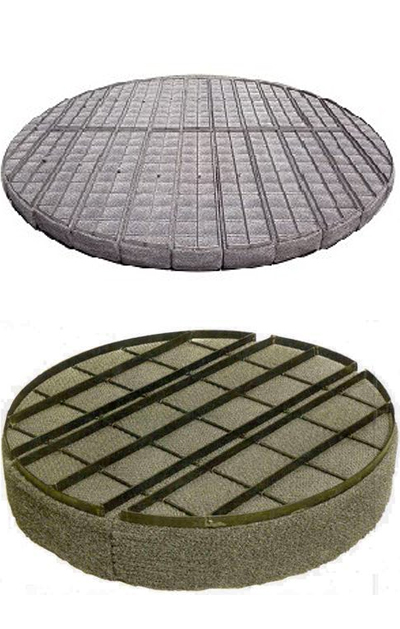
Metallic Demister Pads
Minimum Order Quantity : 100 Pieces
Material : Other, Stainless Steel, Monel, PP, PTFE, Copper, Nickel
Mesh Style : Other , Knitted Mesh
Surface Treatment : Other, Galvanized/Polished/Uncoated
Color : Metallic Silver
Aperture : Varies with mesh type

GST : 29AAICB2882N1Z0
B No. - 20, Nandagokula Indl. Layout, Near Manjushree Garments, Thigalarapalya Main Road, Bengaluru - 560058, Karnataka, India
Phone :07315127394

 Send Inquiry
- Chain Link Fence
- GI Barbed Wire
- MS And Aluminum Perforated Sheets
- Carbon Steel Sheets
- Perforated Sheet
- Stainless Steel Perforated Sheets
- Perforated Metal Sheet
- Barbed Wire
- Crimped Mesh
- Expanded Metal Mesh
- GI Wire Mesh
- Mosquito Mesh
- Mosquito Net
- Stainless Steel Wire Mesh
- Welded Wire Mesh
- Wire Mesh
- Stainless Steel Vibrating Screen Cloth
- Stone Crusher Screen
- Fibre Mesh
- Vibrating Screen
- PVC Fencing
- Vibrating Wire Mesh Screen
- Stone Crusher Wiremesh Screen
- Brass Wire Mesh
- Expanded Metal
- Demister Pads
- Woven Wire Mesh
- Vibrating Screen Mesh
 Send Inquiry
 Call Me Free
Banaraswala Wire Crafts Pvt Ltd
All Rights Reserved.(Terms of Use)
Developed and Managed by Infocom Network Private Limited.
Developed and Managed by Infocom Network Private Limited.

