

Call us now
07315127394

 Send Inquiry
Brass Woven Wire Mesh
Price 40 INR/ Square Foot
MOQ : 100 Square Foots
Brass Woven Wire Mesh Specification
- Hole Shape
- Square
- Wire Gauge
- 10 to 100 SWG
- Length
- 15 Meter (Standard) or Customized
- Surface Treatment
- Polished
- Aperture
- 0.1 mm to 10 mm
- Product Type
- Woven Wire Mesh
- Mesh Type
- Plain Weave
- Mesh Style
- Woven
- Material
- Brass
- Alloy
- 65% Copper, 35% Zinc
- Application
- Filtration, Sieving, Insect Screening, Decorative, EMI Shielding
- Dimensions
- 1 m x 15 m roll (Standard), Custom sizes available
- Wire Diameter
- 0.05 mm to 2.0 mm
- Weight
- Variable, based on mesh and wire diameter
- Color
- Golden Yellow
- Operating Temperature Range
- Up to 200C
- Edge Finish
- Unframed; can be custom framed
- Tensile Strength
- Moderate
- Packing
- Rolls, wrapped in moisture-proof paper or plastic
- Weave Type
- Plain and Twill available
- Corrosion Resistance
- High in non-acidic environments
- Usage
- Industrial, Laboratory, Architectural, Construction
- Open Area Percentage
- 30% to 65% (varies by mesh)
Brass Woven Wire Mesh Trade Information
- Minimum Order Quantity
- 100 Square Foots
- Payment Terms
- Cash in Advance (CID)
- Supply Ability
- 5000 Square Foots Per Month
- Delivery Time
- 7 Days
- Main Domestic Market
- All India
About Brass Woven Wire Mesh
We have been serving our clients with a quality tested range of Brass Woven Wire Mesh in the market. It is comprised of zinc and copper. In this mesh, the presence of the zinc is essential. It hardens the brass mesh allowing the higher tensile strength and providing abrasion resistance. This is the reason that makes the Brass Woven Wire Mesh a great choice for separation and filtration applications.
Versatile Applications Across Industries
Brass woven wire mesh is renowned for its adaptability, serving essential roles in filtration, sieving, EMI shielding, insect screening, and decorative projects. Its robust material composition, in combination with high corrosion resistance and moderate tensile strength, ensures longevity and efficiency in diverse environments, from laboratories to architectural projects.
Customizable to Meet Specific Needs
Offered in standard rolls of 1m x 15m, our product can be tailored by wire gauge, mesh size, open area, and length. We also accommodate special requests for edge framing and specific packings, providing moisture-proof protection. This flexibility makes the mesh suitable for both standard and highly specialized requirements.
FAQ's of Brass Woven Wire Mesh:
Q: How is the brass woven wire mesh typically installed or used in architectural and industrial settings?
A: The mesh can be installed unframed or custom framed for ease of fitting into structures such as partitions, facades, or filtration systems. Its flexibility and resilience make it suitable for both permanent fixtures and temporary installations, depending on the project demands.Q: What benefits does brass woven wire mesh offer compared to other materials?
A: Brass mesh resists corrosion exceptionally well in non-acidic environments, delivers moderate tensile strength, enables superior electrical conductivity, and adds an aesthetic golden yellow appearance, making it a preferred choice for both functional and decorative uses.Q: When should I opt for plain weave versus twill weave?
A: Plain weave mesh is ideal for uniform strength and fine filtration, often used in laboratories or insect screening. Twill weave, with its enhanced flexibility and strength, is better for heavier-duty applications like industrial sieving or EMI shielding.Q: Where is this type of brass wire mesh commonly applied?
A: Common applications include laboratory filtration, industrial sieving, architectural cladding, insect screening, decorative panels, and electromagnetic interference (EMI) shielding, spanning industries such as construction, research, and electronics.Q: What is the process for customizing the mesh according to specific requirements?
A: Customers can specify wire diameter, mesh count, aperture size, roll length, and width. Edge finishing and surface treatments can be customized, and orders are packaged in rolls with moisture-proof wrapping for safe transport and storage.Q: How does the mesh perform under varying temperatures and environmental conditions?
A: Designed to operate up to 200C, the brass mesh maintains its structural integrity and corrosion resistance in non-acidic, moderate environments, making it reliable for both indoor and outdoor use.Q: What is the benefit of the mesh's open area percentage variation (30%-65%)?
A: The variable open area allows users to select the ideal balance between airflow, filtration precision, and mechanical strength, catering to specific usage scenarios from fine particle filtration to decorative openness.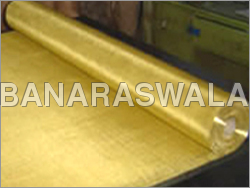
Tell us about your requirement

Price:
Quantity
Select Unit
- 50
- 100
- 200
- 250
- 500
- 1000+
Additional detail
Mobile number
Email

More Products in Brass Wire Mesh Category
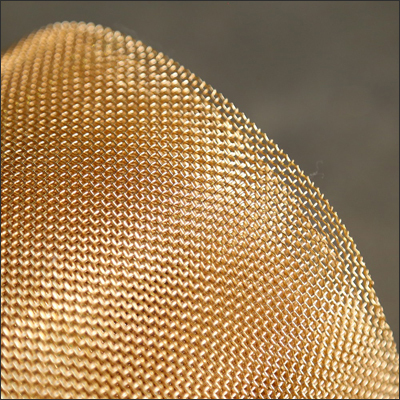
Industrial Brass Wire Mesh
Minimum Order Quantity : 100 Square Foots
Weight : Varies as per size and gauge
Length : Standard Roll Length 15 meters or as per requirement
Mesh Style : Other , Plain Weave
Aperture : 0.15 mm to 6 mm
Wire Diameter : 0.20 mm to 2.11 mm
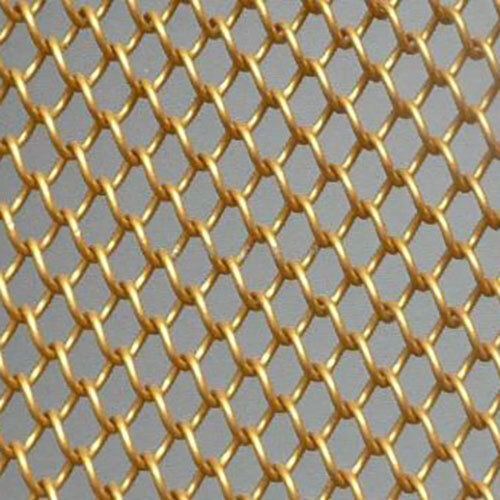
Brass Mesh Wire
Minimum Order Quantity : 100 Square Foots
Weight : Variable, depends on mesh size & dimensions
Length : 30 m 100 m (customizable)
Mesh Style : Woven Mesh, Woven Mesh
Aperture : 0.2 mm 2 mm
Wire Diameter : 0.2 mm 0.6 mm

GST : 29AAICB2882N1Z0
B No. - 20, Nandagokula Indl. Layout, Near Manjushree Garments, Thigalarapalya Main Road, Bengaluru - 560058, Karnataka, India
Phone :07315127394

 Send Inquiry
- Chain Link Fence
- GI Barbed Wire
- MS And Aluminum Perforated Sheets
- Carbon Steel Sheets
- Perforated Sheet
- Stainless Steel Perforated Sheets
- Perforated Metal Sheet
- Barbed Wire
- Crimped Mesh
- Expanded Metal Mesh
- GI Wire Mesh
- Mosquito Mesh
- Mosquito Net
- Stainless Steel Wire Mesh
- Welded Wire Mesh
- Wire Mesh
- Stainless Steel Vibrating Screen Cloth
- Stone Crusher Screen
- Fibre Mesh
- Vibrating Screen
- PVC Fencing
- Vibrating Wire Mesh Screen
- Stone Crusher Wiremesh Screen
- Brass Wire Mesh
- Expanded Metal
- Demister Pads
- Woven Wire Mesh
- Vibrating Screen Mesh
 Send Inquiry
 Call Me Free
Banaraswala Wire Crafts Pvt Ltd
All Rights Reserved.(Terms of Use)
Developed and Managed by Infocom Network Private Limited.
Developed and Managed by Infocom Network Private Limited.

